































Your shopping cart is currently empty.

Tips for Choosing Your First Bass Guitar (10/9/2026)
Picking up a bass for the first time opens the door to rhythm, groove, and a completely different way of hearing a song. The instrument sits between drums and melody, giving players a chance to shape the pulse while still working with notes and phrasing. Choosing your first bass guitar becomes much simpler once you know which features affect playability, tone, and day-to-day practice. Instead of focusing on looks alone, compare the parts of the instrument that directly influence how it feels in your hands and sounds through an amp.
1. Choose Four or Five Strings
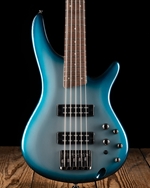
Most beginners gravitate toward a four-string bass because its layout matches the standard tuning used across rock, pop, blues, funk, and many other styles. The four strings typically follow E, A, D, and G from low to high, giving new players plenty of range for common bass lines. A four-string setup also leaves more space between the strings than many five-string designs, which prevents the feeling of crowded finger placement.A five-string bass includes an additional low B string, expanding the instrument below the range of a standard four-string model. That extra range suits players drawn to modern metal, gospel, progressive music, or arrangements that use very low notes. Beginners can absolutely learn on five strings, but choosing one makes the most sense when the music they want to play regularly calls for that extended range.
2. Match Scale Length to Reach
Scale length measures the vibrating distance from the nut to the bridge, and it affects how far the frets sit from one another. Many full-size basses use a 34-inch scale, which gives the instrument the familiar spacing found on countless professional models. Players with small hands or short arms may prefer a short-scale bass since the reduced distance between frets asks for less stretching across the neck.Try reaching the first few frets without twisting the wrist or pulling the shoulder forward. The hand should move naturally enough that simple patterns don’t turn into a physical struggle.
3. Compare Neck Width and Profile
The neck has a major effect on how quickly a bass feels familiar. Some models use a narrow nut and slim profile, giving the fretting hand a compact surface to wrap around. Others have a broad neck with more space between strings, which some players prefer for deliberate finger placement and a substantial grip.Pay attention to the shape along the back of the neck, not just its width at the nut. A rounded profile, flatter contour, or thick carving changes how the thumb rests and how freely the hand shifts between positions. Spend a few minutes moving from the first fret toward the middle of the neck; a good match will let the hand move without readjusting constantly.

4. Check Weight and Balance
Bass guitars usually have larger bodies and longer necks than electric guitars. An instrument that feels manageable for thirty seconds may tire out the arms after practicing for an hour. Strap the bass on, stand naturally, and notice whether the body rests securely or the neck continually drops toward the floor.Balance matters just as much as total weight because a well-balanced instrument places less work on the fretting hand. If the neck dives, the player may end up holding it in position rather than concentrating on notes and timing. Sitting with the bass provides another useful test, especially for anyone who expects to practice primarily at home.
5. Listen to Pickup Character
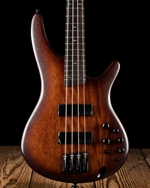
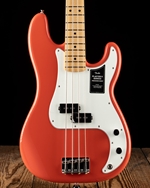
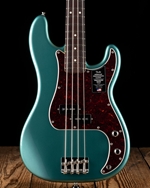
Pickups convert string vibration into the electrical signal that travels to an amplifier, so they shape much of a bass guitar’s amplified voice. Precision-style split pickups tend to produce a full, focused sound with a solid low end, while single-coil layouts offer extra tonal variation between the neck and bridge positions. Humbucking bass pickups commonly deliver a thick output with reduced electrical hum.No pickup type belongs to one genre, so listen for the response that fits the music you enjoy. Play the same short phrase on several basses through the same amp settings. Then, compare attack, low-end fullness, midrange presence, and high-frequency detail. Keeping the amplifier consistent reveals what comes from the instrument itself.
6. Decide Between Passive and Active
Passive basses send the pickup signal through simple onboard volume and tone controls without relying on a battery-powered preamp. Their controls usually feel straightforward, which appeals to players who want to shape most of their sound from the instrument, amplifier, or pedals.Active basses use a battery-powered preamp that lets the player adjust frequencies directly from the instrument. Depending on the model, onboard controls may cover bass, midrange, and treble, giving players a wide range of tonal adjustment before the signal reaches the amp. Choose active electronics when that extra control serves the music you plan to play, not simply because the control layout looks more advanced.
7. Set a Total Gear Budget
The price of the bass represents only part of the first purchase. Most electric bass players will also want an amplifier, instrument cable, strap, tuner, and a case or gig bag. Budgeting for the complete setup prevents the instrument from consuming every available dollar. Spending thoughtfully across the full rig usually leads to a smooth first practice experience.Set the budget before comparing models, then leave room for accessories that directly affect regular playing. An expensive bass paired with unreliable basics may cause more frustration than a modest instrument with dependable gear around it. Used instruments can expand the options at a given price, though buyers should still inspect fret condition, electronics, hardware, and overall setup before committing.
8. Play Several Basses Before Buying
Specifications narrow the search, but hands-on playing reveals details that numbers and product descriptions cannot fully communicate. Try several basses within the same price range and play identical notes, scales, or simple riffs on each one. Consistent testing helps expose differences in neck feel, balance, string spacing, control placement, and overall response.Hold a few notes, move between frets, pluck each string, turn the controls, and listen for unwanted noise through an amp. If one bass encourages relaxed hands and makes practice feel inviting, that reaction carries real value even before technique develops.