










Your shopping cart is currently empty.

A Complete Guide to Acoustic Guitar Body Shapes (9/22/2026)
Set two acoustic guitars side by side, and their outlines have vastly different features that will affect the sounds produced. A broad-bodied model tends to give chords low-end weight, whereas a smaller guitar answers a light touch with tight, separated notes. Acoustic guitar body shapes influence projection, tonal balance, bass response, and comfortability. Learning about the various shapes will help you choose the guitar that fits your playing style.
1. Dreadnought
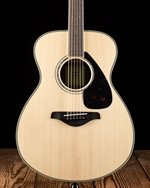
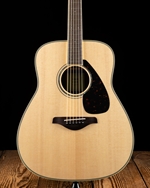
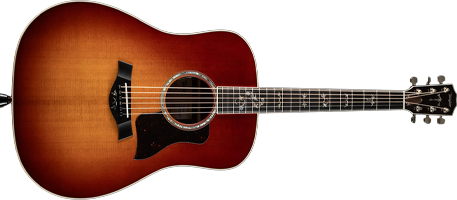 The dreadnought has a recognizable guitar shape, thanks to its broad shoulders, wide waist, and deep body. The large sound chamber produces a substantial voice that’s especially satisfying under a pick. Players who favor folk, country, bluegrass, rock, and singer-songwriter music frequently gravitate toward this familiar design.
Bass Response
A dreadnought usually delivers a firm low end with enough depth to give open chords a strong foundation. Well-balanced models pair that weight with clear mids and trebles, so alternating bass notes, chord changes, and melodic runs are easy to hear. For rhythm guitar, that full response gives strummed chords extra body without amplification.
Strumming Projection
A strong pick attack brings out one of the dreadnought’s defining strengths: projection. The large top moves plenty of air, allowing energetic strumming and flatpicking to sound bold. Plus, the character of the notes doesn’t become lost. Musicians who dig into the strings tend to appreciate how much volume and fullness the body provides.
2. Concert
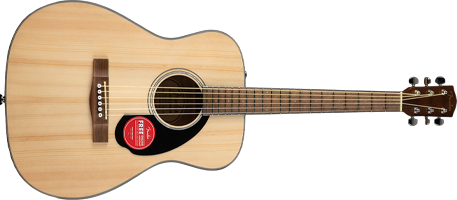 Concert guitars sit on the smaller side of the full-size acoustic family. The narrow body brings the instrument close to the player. Not to mention, the compact air chamber emphasizes control and articulation over booming low-end power.
Seated Comfort
A small lower bout takes up minimal space across the lap and under the picking arm. For a player who feels crowded by a dreadnought, this model will settle into position with ease. The close reach around the instrument appeals to many young players and adults with petite frames.
Fingerpicking Clarity
Concert-style bodies respond quickly to a light touch, helping separate the notes in fingerpicked patterns. A thumbed bass note, inner harmony, and high melody line each have room to register without a large low end washing across the phrase. That definition gives fingerstyle players useful control over quiet passages and subtle changes in attack.
3. Auditorium
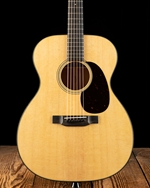
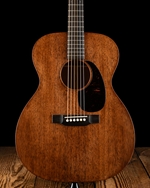
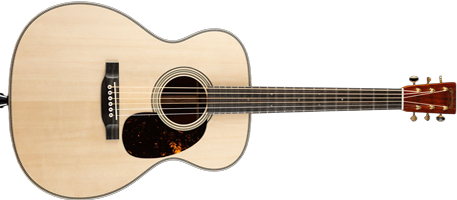 Auditorium guitars occupy the middle ground between compact Concert bodies and larger dreadnought-style instruments. Martin, for instance, uses 000 to identify its Auditorium size, pairing moderate dimensions with a balanced acoustic response. Players who move between chord work and individual-note playing tend to appreciate this middle-sized approach.
Tonal Balance
Instead of placing most of its personality in a powerful bass register, an Auditorium body tends to distribute its voice more evenly. Lows provide warmth, mids carry detail, and trebles keep melodies distinct. Chords sound full without becoming overly heavy, so the guitar remains articulate when a player shifts into single-note passages.
Dynamic Response
The Auditorium guitar usually reacts well to changes in picking strength. A light finger attack produces definition, then a firmer strum brings more volume and energy without demanding an entirely different technique. Expressive players have room to move from quiet verses into strong choruses using the same instrument.
4. Grand Auditorium
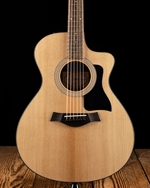
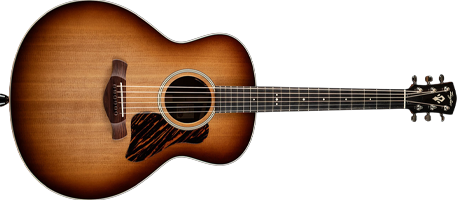 The Grand Auditorium expands on the balanced character associated with medium-bodied acoustics. Taylor introduced the shape with a tapered waist and enough lower-bout width to produce solid volume, placing it between compact fingerstyle instruments and broader traditional designs. Its proportions suit players who use several techniques across different songs.
Midrange Presence
A defined midrange gives the Grand Auditorium much of its clarity. Chords retain body, and melodic lines remain present enough to come through clearly beside a vocal or other instruments. Singer-songwriters frequently appreciate the substantial sound that doesn’t depend on an oversized bass response.
Fingerstyle and Strumming Response
The Grand Auditorium responds comfortably to both individual finger attack and moderate strumming. Fingerpicked notes come through with definition, then a pick draws out more volume without muddying the sound. Players who switch between delicate arpeggios and steady chord work get a body style that handles both approaches naturally.
5. Jumbo
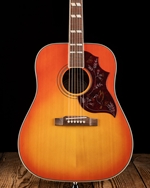
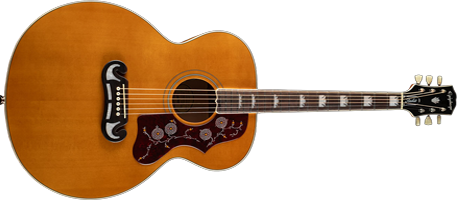 A jumbo acoustic uses a broad lower bout and large body to produce a big, room-filling voice. Gibson’s Super Jumbo designs offer a well-known example of this family. The design favors players who enjoy substantial volume, deep resonance, and a strong physical presence from the instrument.
Low-End Power
Additional body volume generally gives a jumbo plenty of low-frequency depth. Full chords develop a broad foundation, especially under a firm attack that lets the open strings ring. For solo accompaniment or strong rhythm parts, the bass response fills space beneath the high strings to give the guitar a rich, expansive character.
Playing Position
A broad lower bout changes how the instrument sits against the torso and picking arm. Some players enjoy the substantial feel because the guitar seems planted in place, giving the strumming arm a large surface to rest against. Others prefer a compact shape that keeps the elbow lower, so trying a jumbo seated quickly reveals whether the proportions feel natural.
6. Parlor
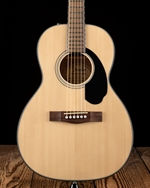
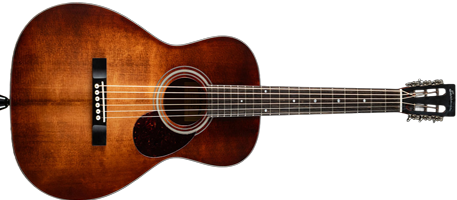 Parlor guitars bring the body size down considerably, typically using a narrow waist and compact lower bout. Their small air chamber favors a tighter, more intimate response than the broad voice of a dreadnought or jumbo. The style has strong associations with blues, folk, and fingerstyle music, though musicians use these guitars across many genres.
Focused Midrange
A parlor guitar tends to emphasize the middle and upper portions of its voice rather than deep bass. The focused character distinguishes picked notes, short melodic phrases, and alternating-bass patterns. Blues and fingerstyle players frequently enjoy the direct response because individual notes retain plenty of personality.
Compact Body
The small body sits close to the player, reducing the reach around the lower bout. For practicing casually on the couch or working on songwriting, the close, relaxed position is favorable to many musicians. Compact proportions don’t automatically turn a parlor guitar into a beginner instrument; experienced players choose them for their distinctive voice, immediate response, and comfortable feel too.
Find an Acoustic Guitar Made for You
Knowing the differences among acoustic guitar body shapes gives players a way to narrow a crowded field of instruments. Tonewoods, bracing, strings, and construction still influence the final sound, but body shape offers an immediate clue about projection, response, and playing position.N Stuff Music is an acoustic guitar shop that encourages players to try out these guitars for themselves. To find the perfect fit, visit our Pittsburgh shop to strum each of the different acoustic guitar shapes. You’ll be able to feel the difference in each instrument for yourself.